
Biology, Mythology, and the Supernatural: The Science of Monsters

From the depths of ancient folklore to the pages of modern horror, monsters have captivated human imagination for centuries. These creatures, often born from a mix of fear and fascination, have been depicted in various forms across different cultures. While they may seem like mere figments of our collective nightmares, the study of monsters can reveal a great deal about human psychology, cultural history, and even aspects of real-world biology. This article delves into the science behind these supernatural beings, exploring their origins, evolution, and the biological inspirations that might have sparked their creation.

Biology and the Birth of Monsters:
Many monsters have roots in the natural world, twisted and exaggerated by human imagination. For instance, the vampire’s aversion to garlic could stem from the plant’s antimicrobial properties, which might have been believed to ward off disease-spreading entities. Similarly, the werewolf’s transformation under a full moon might be linked to ancient observations of the moon’s effects on human behavior or the rare genetic condition known as hypertrichosis, which causes excessive hair growth.

The kraken, a giant sea monster from Norse mythology, could be inspired by real-life giant squids, whose elusive nature and colossal size have fueled maritime legends for centuries. The yeti or Bigfoot, often described as a large, bipedal ape-like creature, might be a mythologized version of the now-extinct giant apes that once roamed the Earth.

Mythology and Cultural Significance:
Monsters are not just biological oddities; they are cultural symbols that often reflect the fears and values of the societies that create them. The ancient Greeks, for example, populated their myths with creatures like the Minotaur, a hybrid of man and bull, which represented the struggle between civilization and barbarism.

In many cultures, monsters serve as cautionary tales, embodying the dangers of the natural world or the consequences of moral failings. The Japanese oni, or demons, are often depicted as punishing those who have strayed from the path of righteousness.

The Supernatural and the Unknown:
While some monsters can be traced back to real animals or human conditions, others belong entirely to the realm of the supernatural. These beings, such as ghosts or spirits, challenge our understanding of life, death, and the afterlife. They often represent humanity’s fear of the unknown and the desire to explain phenomena that science has yet to unravel.

The study of the supernatural through monsters can also shed light on the development of religious and spiritual beliefs. Many cultures have deities or spirits that take on monstrous forms, acting as intermediaries between the human and divine worlds.

Conclusion:
The science of monsters is a fascinating intersection of biology, mythology, and the supernatural. By examining these creatures, we can gain insights into the workings of the human mind, the evolution of cultural narratives, and the ways in which we have sought to explain the natural world around us. Monsters may be the stuff of nightmares, but they also reflect our deepest curiosities and our enduring quest to understand the mysteries of existence. Whether they are based on real animals, represent cultural fears, or embody the unexplained, monsters continue to captivate us, blending the boundaries between the real and the imagined.
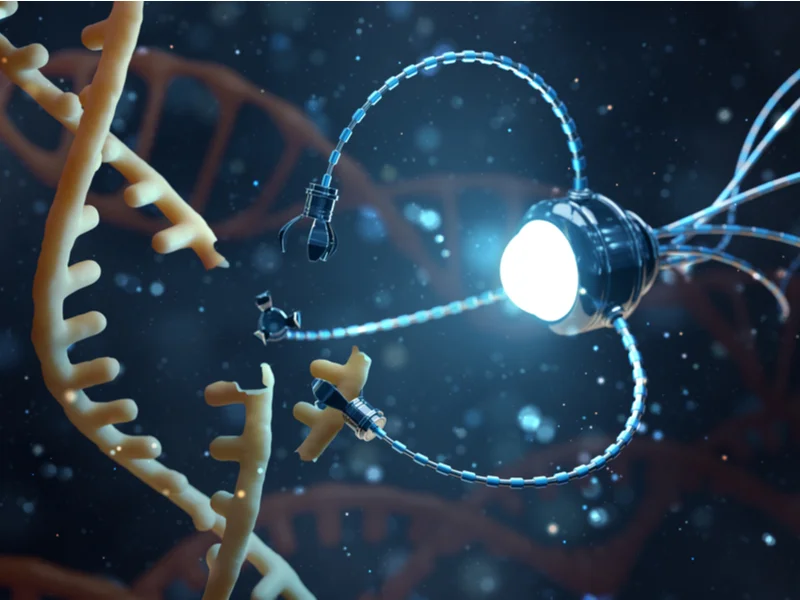
Nanotechnology: Big Impact, Small Science

In the realm of science and technology, the prefix “nano” often precedes revolutionary advancements that defy the ordinary. Nanotechnology, the engineering of functional systems at the molecular scale, is no exception. This field, which operates at the scale of one-billionth of a meter, has the potential to transform industries, medicine, and even the way we interact with our environment. The impact of nanotechnology is vast, despite its infinitesimal scale, making it a prime example of how small science can lead to big changes.

The Essence of Nanotechnology

Nanotechnology involves the manipulation of matter at the atomic and molecular levels to create materials, devices, or systems with new and enhanced properties. This manipulation can result in structures that are significantly different from those at larger scales, leading to unique optical, electrical, and mechanical properties. The essence of nanotechnology lies in its ability to control and utilize matter at the nanoscale, where quantum effects become significant, and the properties of materials can be precisely tailored for specific applications.

Applications Across Industries

Medicine and Healthcare

One of the most promising applications of nanotechnology is in the field of medicine. Nanoparticles can be engineered to deliver drugs directly to diseased cells, reducing side effects and improving treatment efficacy. This targeted drug delivery can revolutionize cancer therapy, allowing for treatments that are more effective and less damaging to healthy cells. Additionally, nanotechnology is being explored for the development of new vaccines, diagnostic tools, and even regenerative medicine, where nanomaterials can be used to promote tissue growth and repair.

Electronics and Computing

In electronics, nanotechnology is leading to the development of smaller, faster, and more energy-efficient devices. Transistors with components at the nanoscale are enabling the next generation of supercomputers and smartphones, pushing the boundaries of processing power and speed. Moreover, nanomaterials like graphene are being researched for their potential in creating flexible electronics, wearable technology, and even transparent displays.

Energy

Nanotechnology is also making significant strides in the energy sector. Nanomaterials can enhance the efficiency of solar cells, making renewable energy more viable and cost-effective. Additionally, the development of nanostructured batteries could lead to higher energy densities, faster charging times, and longer lifespans, revolutionizing the way we store and use energy.

Environmental Impact

The environmental applications of nanotechnology are equally impressive. Nanomaterials can be used to create more efficient filters for water purification, helping to address global water scarcity and pollution issues. Moreover, nanotechnology can play a crucial role in the remediation of contaminated soil and water, offering solutions that are more effective and less invasive than traditional methods.

Ethical and Safety Considerations

Despite its potential, nanotechnology also raises important ethical and safety considerations. The unique properties of nanomaterials at such small scales can lead to unforeseen interactions with biological systems, raising concerns about their environmental and health impacts. As such, the development of nanotechnology must be accompanied by rigorous safety assessments and ethical considerations to ensure that its benefits are maximized while minimizing potential risks.

Conclusion

Nanotechnology represents a frontier in science and engineering, where the manipulation of matter at the smallest scales can lead to transformative changes in technology, medicine, and beyond. Its impact is vast, offering solutions to some of the most pressing challenges of our time. As research in this field continues to advance, the potential for nanotechnology to shape the future is limited only by our imagination and our commitment to responsible innovation. Small science, indeed, has the potential for big impact, and nanotechnology stands at the forefront of this transformative journey.