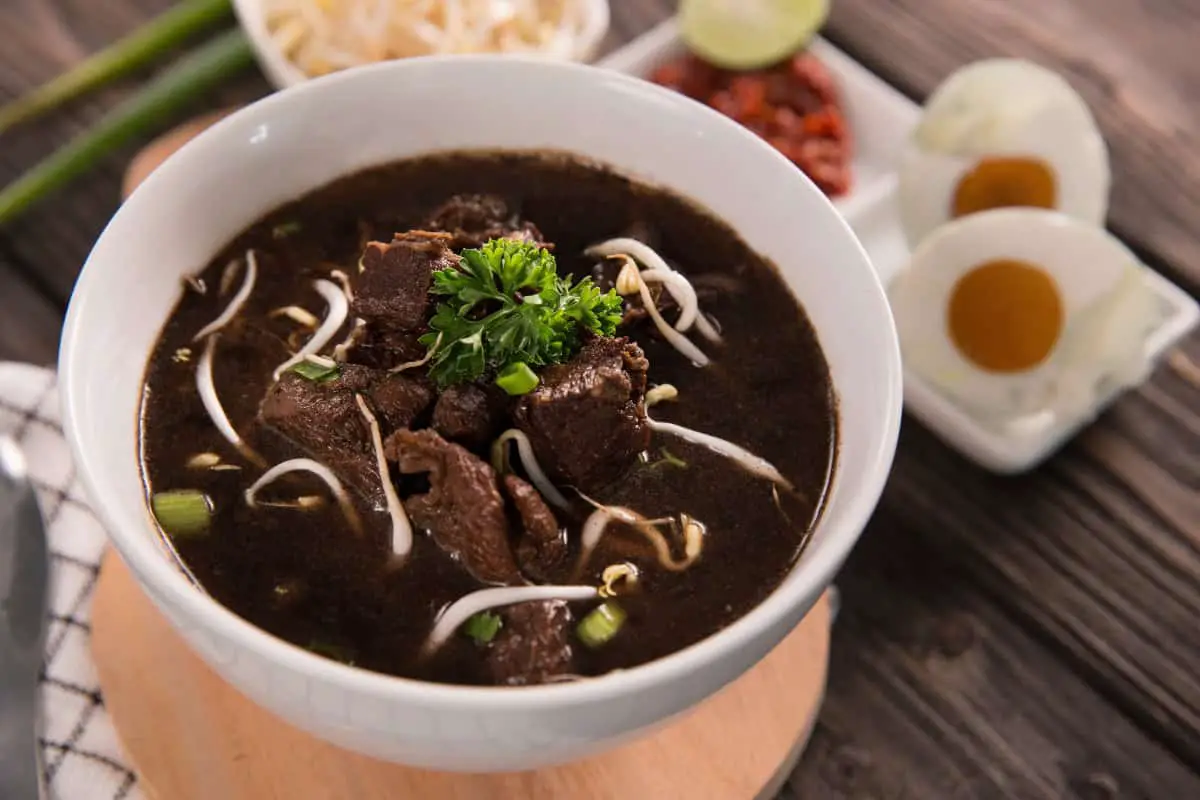
molecular-designs.com – Rawon is a unique and aromatic beef soup that hails from East Java, Indonesia. Known for its distinctive black color and rich, savory flavor, Rawon is a dish that stands out in Indonesian cuisine. The soup’s deep color comes from the use of keluak nuts, which are an essential ingredient that gives Rawon its signature taste. A favorite among many, Rawon is a dish that combines traditional spices with tender beef, creating a hearty and comforting meal.
The Ingredients and Preparation of Rawon
The key to Rawon’s unique flavor lies in its carefully selected ingredients, which are blended to create a complex and savory broth. The primary components of Rawon include:
- Beef: Typically, beef shank or brisket is used for its tenderness and flavor.
- Keluak Nuts: These nuts are soaked and then ground to release their dark, rich essence, which gives the soup its black color.
- Spices and Aromatics: A blend of shallots, garlic, ginger, turmeric, coriander, lemongrass, and kaffir lime leaves brings depth to the broth.
- Other Ingredients: Galangal and bay leaves are also commonly used to enhance the soup’s aroma and taste.
To prepare Rawon, the beef is simmered with the spice paste and keluak nuts to allow the flavors to meld together. The process of slow cooking ensures that the beef becomes tender and the broth develops its characteristic depth of flavor.
Serving Rawon
Rawon is typically served with a side of steamed rice, making it a satisfying and complete meal. Common accompaniments include:
- Bean Sprouts: These add a crunchy texture and freshness to the dish.
- Sambal: A spicy chili paste that enhances the flavor profile of Rawon.
- Lime Wedges: For a hint of acidity that brightens the soup.
- Fried Shallots: Sprinkled on top for extra flavor and crunch.
Some variations of Rawon may include additional garnishes like boiled eggs or tempeh, adding further texture and taste to the dish.
The Cultural Significance of Rawon
Rawon is not just a culinary delight; it is a dish deeply rooted in Indonesian heritage and tradition. Originating from East Java, it is a testament to the rich culinary history of the region. Rawon is often enjoyed during special occasions, family gatherings, and communal meals, highlighting its role in bringing people together.
The dish’s unique use of keluak nuts and traditional spices reflects the diverse influences and indigenous ingredients that shape Indonesian cuisine. Rawon’s popularity has spread beyond East Java, making it a cherished dish throughout Indonesia.
Conclusion
Rawon is a flavorful and aromatic soup that showcases the depth and diversity of Indonesian cuisine. Its use of unique ingredients like keluak nuts and a blend of traditional spices results in a dish that is both comforting and intriguing. Whether you’re savoring it for the first time or enjoying it as a familiar favorite, Rawon offers a delightful taste of Indonesia’s rich culinary tradition.