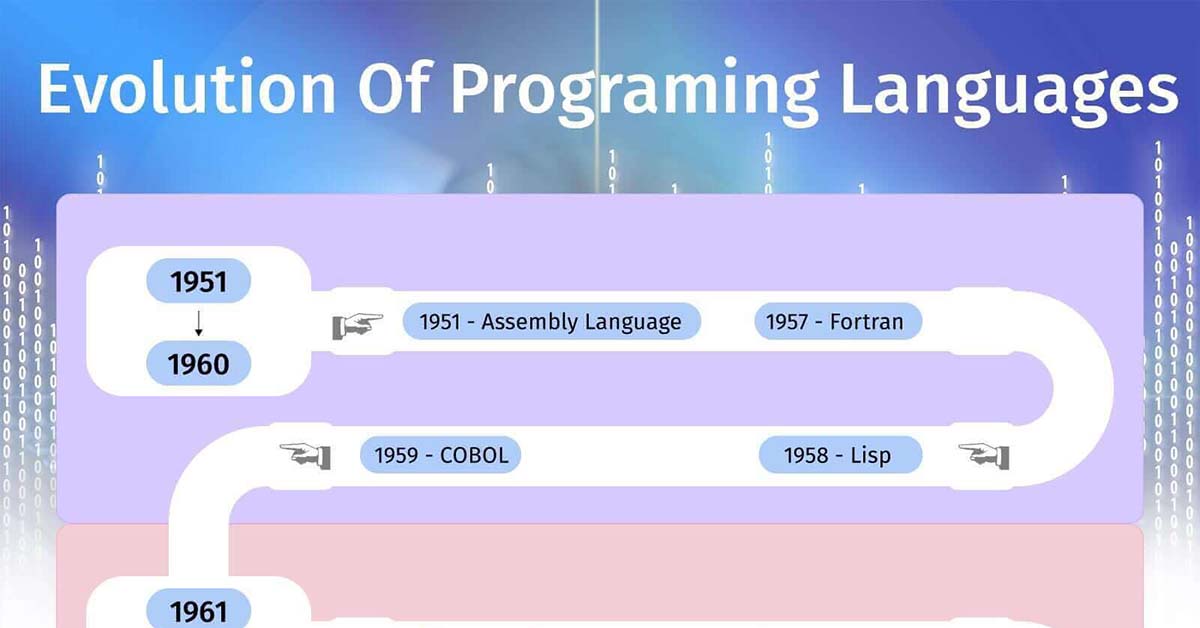
The Evolution of Continuations in Programming Languages

molecular-designs.com – Continuations have been a significant yet often overlooked aspect of programming language evolution. These constructs, which allow a program to save its execution state and later resume from that point, have played a crucial role in shaping the capabilities and expressiveness of programming languages. This article explores the evolution of continuations, from their early implementations to their modern applications, highlighting their impact on programming paradigms and language design.

Early Implementations

The concept of continuations can be traced back to the early days of functional programming languages. In the 1970s, Scheme, a dialect of Lisp, introduced first-class continuations, which allowed functions to capture and manipulate the control flow of the program. This was a groundbreaking feature that enabled powerful control structures such as coroutines and exception handling without the need for explicit control flow statements like go to or return.

Influence on Programming Paradigms

Continuations have influenced various programming paradigms, including functional programming and event-driven programming. In functional programming, continuations have been used to implement monads, which are a way to structure programs generically while still supporting effects like input/output and exceptions. This has been particularly useful in languages like Haskell, where monads are used to handle side effects in a pure functional setting.

In event-driven programming, continuations have been used to model asynchronous operations, where the program can pause execution and later resume based on external events. This has been crucial in the development of web frameworks and GUI applications, where responsiveness and concurrency are key requirements.

Modern Applications

In recent years, continuations have found new applications in the context of web development and distributed computing. For instance, continuation-passing style (CPS) is used in JavaScript to handle asynchronous operations, such as AJAX requests, in a way that is both efficient and easy to manage. This has been a significant factor in the development of modern web applications, which often involve complex interactions with the server and client.

Impact on Language Design

The inclusion of continuations in programming languages has had a profound impact on language design. Languages that support continuations, such as Scheme and JavaScript, are often more expressive and flexible, allowing developers to write more powerful and efficient code. However, the complexity of continuations can also make them challenging to understand and use, which has led some language designers to opt for simpler control flow mechanisms.

Conclusion

Continuations have been a fundamental aspect of programming language evolution, influencing everything from functional programming to modern web development. As programming languages continue to evolve, the role of continuations is likely to remain significant, providing developers with powerful tools to handle complex control flow and concurrency. Understanding the history and impact of continuations is essential for anyone looking to master modern programming techniques.
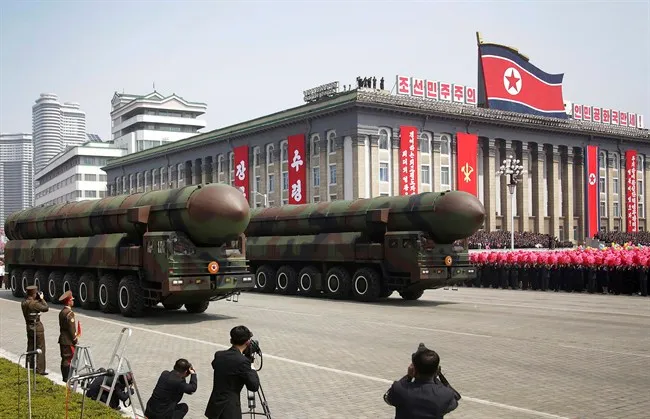
The Evolution of North Korea’s Nuclear Program

molecular-designs.com – The development of North Korea’s nuclear program is a complex and multifaceted story, marked by periods of rapid advancement and diplomatic efforts to curb its proliferation. This narrative can be divided into several distinct phases, each characterized by significant milestones and international responses.

Phase 1: Inception and Early Development (1950s-1970s)

The roots of North Korea’s nuclear ambitions can be traced back to the 1950s, during the Cold War. The Korean War, which ended in 1953, left North Korea deeply suspicious of the intentions of the United States and other Western powers. This suspicion, coupled with the geopolitical tensions of the era, prompted North Korea to seek nuclear capabilities as a deterrent against potential aggression.

In the early 1960s, North Korea began to accumulate indigenous knowledge and technical expertise in nuclear technology. This phase saw the establishment of the Atomic Energy Research Institute in 1952 and the commencement of nuclear research, which included the construction of a small experimental nuclear reactor at Yongbyon in 1979.

Phase 2: Expansion and International Scrutiny (1980s-1990s)

The 1980s and 1990s were marked by increased international scrutiny and efforts to contain North Korea’s nuclear ambitions. The discovery of North Korea’s plutonium reprocessing activities in the early 1980s led to heightened tensions with the United States and other countries. In response, the international community imposed sanctions and sought to engage North Korea in negotiations to halt its nuclear program.

A significant diplomatic breakthrough came in 1994 with the signing of the Agreed Framework, which aimed to freeze North Korea’s nuclear program in exchange for economic aid and the construction of light-water reactors. However, this agreement collapsed in 2002 when North Korea claimed to have withdrawn from the Nuclear Nonproliferation Treaty (NPT) and restarted its nuclear facilities.

Phase 3: The Six-Party Talks and Intensified Nuclear Activity (2003-2009)

The Six-Party Talks, involving North Korea, China, Japan, Russia, South Korea, and the United States, were initiated in 2003. These talks led to several breakthroughs, including North Korea’s pledge to abandon its nuclear weapons programs in 2005. However, the talks collapsed in 2009 due to disagreements over verification and North Korea’s missile tests, leading to a resumption of nuclear activities.

Phase 4: Recent Developments and Diplomatic Efforts (2010s-Present)

In recent years, North Korea has continued to develop its nuclear and missile capabilities, conducting numerous tests and claiming to have a “complete” nuclear arsenal by 2018. Despite several diplomatic efforts, including summits between North Korean leader Kim Jong Un and U.S. President Donald Trump in 2018 and 2019, progress towards denuclearization has been slow. North Korea has shown little interest in returning to the negotiating table and has continued to conduct missile tests, leading to increased international tensions.

Conclusion

The evolution of North Korea’s nuclear program is a story of strategic maneuvering, international diplomacy, and persistent nuclear development. While there have been moments of hope and progress, such as the Agreed Framework and the Six-Party Talks, these have often been followed by setbacks and renewed nuclear activities. The current situation remains precarious, with ongoing international efforts to curb North Korea’s nuclear ambitions and the regime’s insistence on maintaining its nuclear capabilities. The future of North Korea’s nuclear program will likely continue to be shaped by a complex interplay of military, diplomatic, and economic factors.